 11
11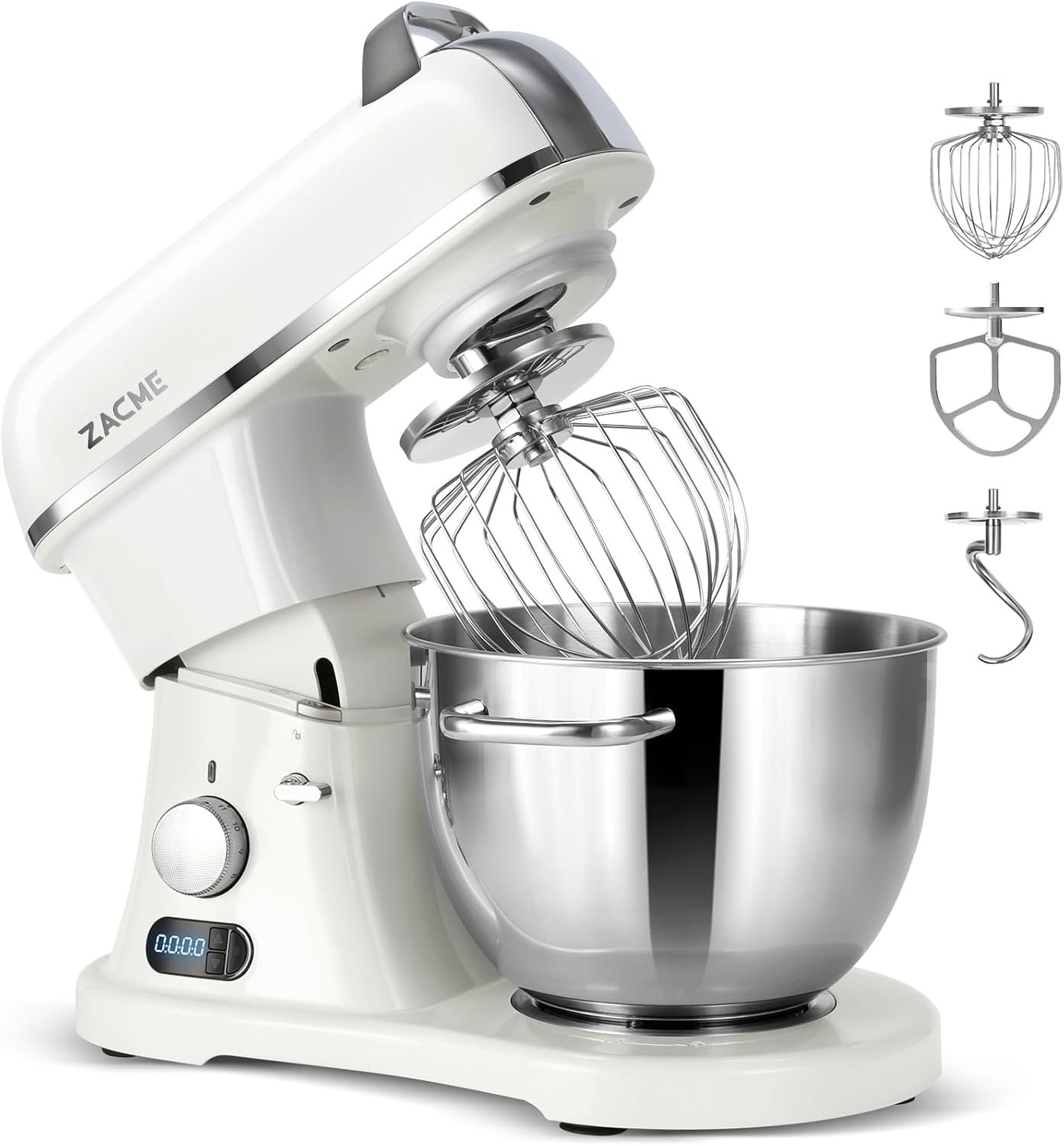
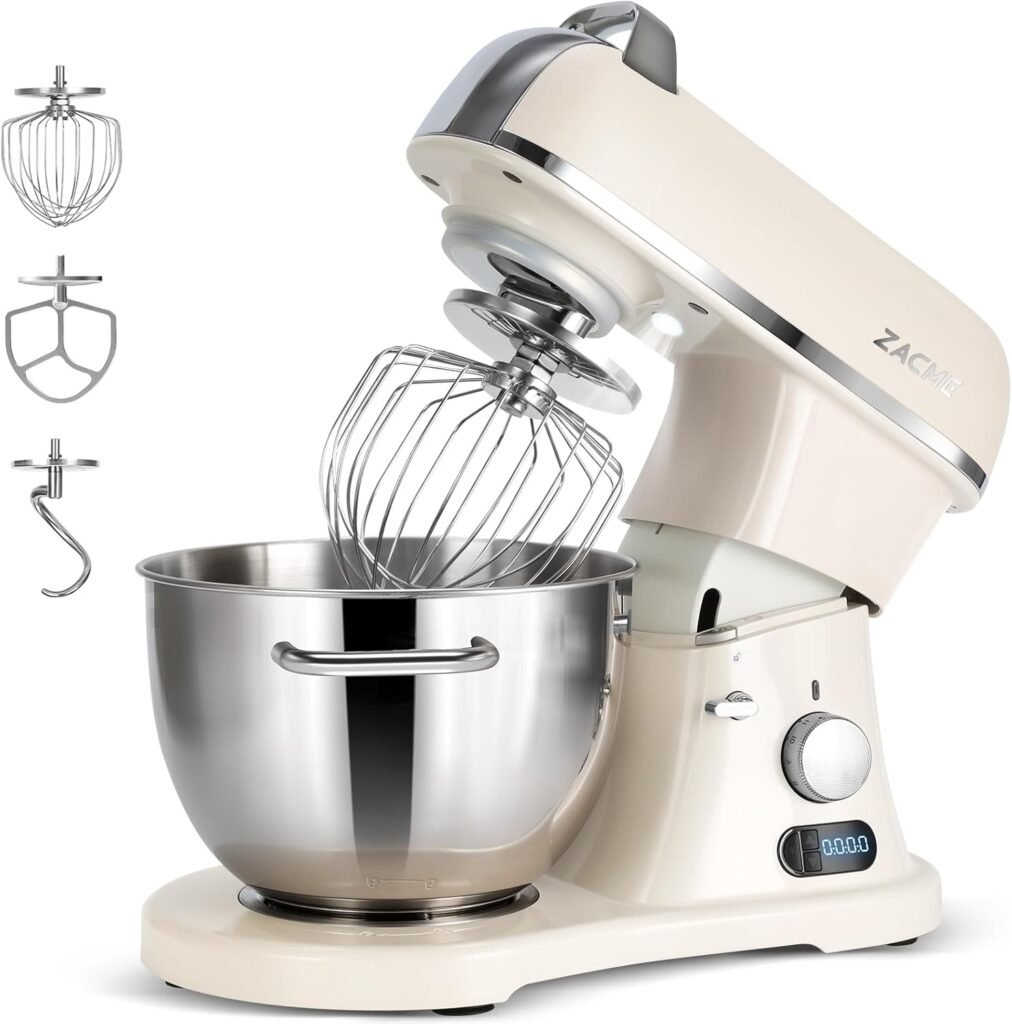
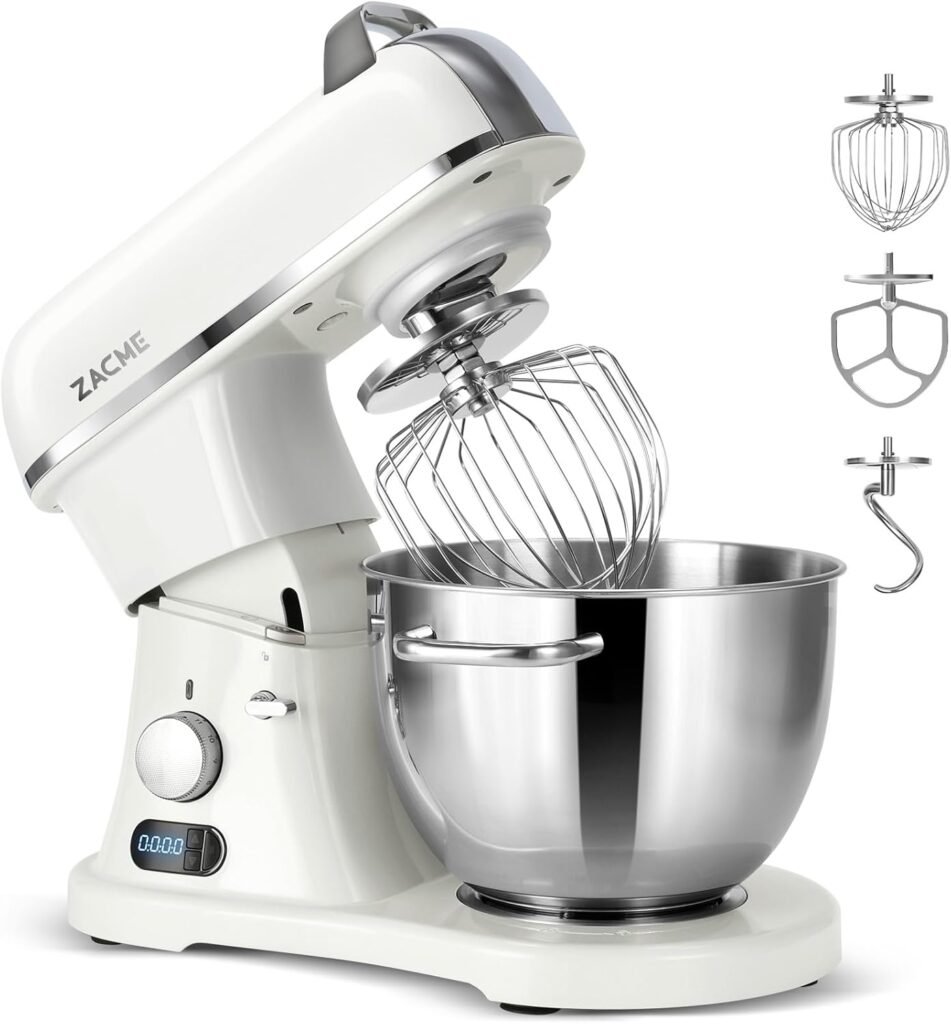
Stand mixers have become essential tools in modern kitchens, especially for individuals who frequently prepare baked goods, dough-based recipes, or large batches of food. Commercial-style mixers are particularly useful when higher capacity and stronger mixing power are needed. One example in this category is the ZACME 8.4QT Commercial Stand Mixer 800W, a countertop mixer designed to handle demanding mixing tasks in both home and professional cooking environments.
This guide provides a detailed overview of the appliance, including its design, technical characteristics, included components, and typical kitchen uses. The goal is to present clear and educational information that helps readers understand how commercial stand mixers function and where a model like the ZACME mixer fits within a modern kitchen setup.
Stand mixers are electric kitchen appliances designed to automate mixing tasks such as kneading dough, whipping ingredients, or blending batters. Unlike handheld mixers, stand mixers operate hands-free and typically feature a stationary bowl with rotating attachments that mix ingredients consistently.
Commercial-style stand mixers differ from smaller household models in several key ways:
These characteristics allow commercial mixers to support more demanding recipes and larger quantities of ingredients.
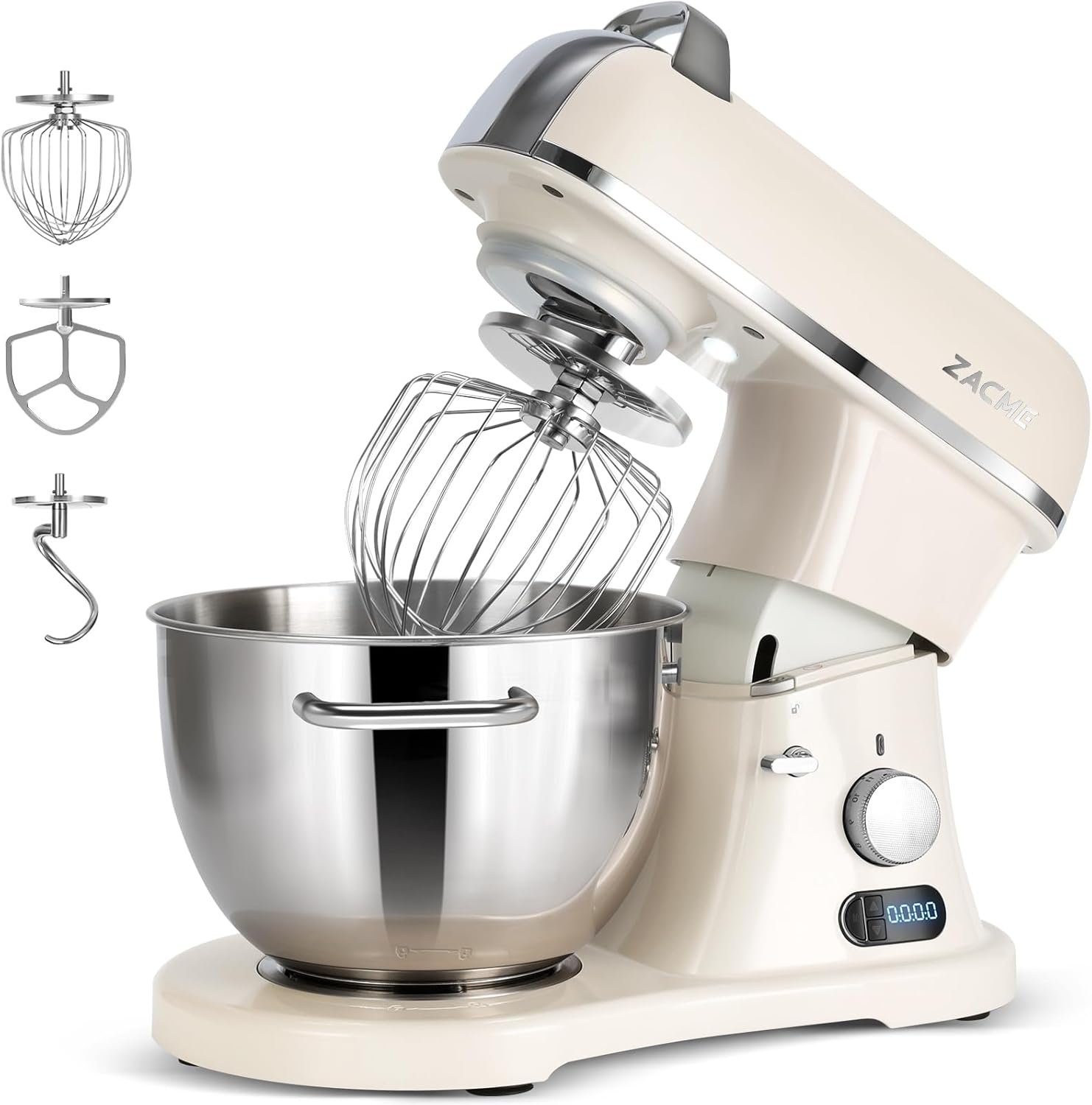
The ZACME 8.4QT Commercial Stand Mixer belongs to this category, offering an 800-watt motor and an 8.4-quart (8-liter) stainless steel bowl intended for high-volume mixing tasks.
The ZACME mixer is designed as a large-capacity electric stand mixer capable of handling a variety of kitchen tasks. Its specifications and included accessories make it suitable for preparing multiple types of recipes, including bread dough, cake batter, whipped cream, and other mixtures.
Some of the main characteristics include:
These features reflect a design focused on durability, capacity, and performance during frequent use.
One of the most important components of any stand mixer is its motor. The ZACME mixer uses an 800-watt motor, which provides the power needed for mixing both light and dense ingredients.
Motor power directly affects how well a mixer can handle tasks such as kneading bread dough or mixing thick batters. Higher wattage typically allows the mixer to maintain consistent performance even when the mixture becomes heavy or resistant.
For example:
A stronger motor can maintain stable rotation during these tasks without slowing down significantly.
Capacity is another defining characteristic of commercial stand mixers. The 8.4-quart (8-liter) stainless steel bowl provides significantly more space than many standard household mixers.
A larger bowl offers several practical benefits:
1. Preparing Large Batches
The bowl can accommodate larger ingredient quantities, which is helpful when preparing:
2. Improved Ingredient Movement
When the bowl is large enough, ingredients have more room to move during mixing. This can help ensure that all components are incorporated evenly.
3. Durable Stainless Steel Construction
Stainless steel is commonly used in commercial kitchen equipment because it offers:
These properties make stainless steel bowls well suited for repeated food preparation tasks.
The ZACME stand mixer incorporates aluminum die-casting components, a manufacturing method used to create strong and precise metal parts.
Die-casting involves forcing molten metal into molds to create solid components with consistent shapes and structural integrity. In kitchen appliances, this process is often used to produce:
Aluminum die-casting offers several advantages:
These characteristics contribute to the overall sturdiness of the mixer during operation.
The ZACME mixer is designed to meet the NSF/ANSI 8-2023 standard, which relates to food equipment used in kitchens.
The NSF/ANSI 8 standard applies to commercial food preparation equipment, covering areas such as:
Compliance with such standards generally indicates that the appliance is designed with hygienic food preparation practices in mind.
For environments such as commercial kitchens, bakeries, or food preparation spaces, these standards can play an important role in equipment selection.
The mixer comes with three primary attachments, each designed for a specific mixing function.
The dough hook is used for kneading bread and pizza dough.
Kneading is the process of stretching and folding dough to develop gluten, which gives bread its structure and elasticity. Performing this process manually can be physically demanding, especially when preparing large batches.
A dough hook attachment performs this motion automatically, allowing the mixer to knead dough evenly.
Typical uses include:
The flat beater is designed for general mixing tasks.
It works well for medium-density mixtures and is often used when preparing:
Because it reaches a large portion of the bowl’s interior, the flat beater can combine ingredients thoroughly.
The wire whisk attachment is intended for whipping and aerating mixtures.
Whipping introduces air into ingredients, creating lighter textures in recipes such as:
The whisk’s multiple wires help trap air efficiently while mixing.
Stand mixers operate using a rotating attachment combined with a stationary bowl. The attachment moves through the ingredients while the motor controls speed and power.
Although mixing mechanisms may vary slightly across models, most stand mixers rely on a planetary mixing motion. This means the attachment rotates on its own axis while simultaneously moving around the bowl.
This type of motion helps ensure that the attachment reaches many areas inside the bowl, reducing the likelihood of unmixed ingredients remaining on the sides.
Planetary mixing is commonly used in both professional and home stand mixers because it supports consistent ingredient blending.
Commercial stand mixers like the ZACME model can support a wide range of culinary tasks.
Baking is one of the primary uses for stand mixers. They help streamline processes that require consistent mixing.
Typical baking uses include:
Because baking recipes often require precise mixing times and textures, stand mixers can help maintain consistency.
Dough preparation can be physically demanding when done by hand. Stand mixers equipped with dough hooks simplify this process by performing repetitive kneading motions automatically.
Common dough recipes include:
Large-capacity mixers are especially useful when working with multiple loaves.
Many desserts rely on whipped ingredients or smooth batters. Stand mixers can assist with:
Whisk attachments are particularly effective for these tasks.
Although stand mixers are commonly associated with baking, they can also be useful for savory dishes.
Examples include:
The flat beater attachment is often used for these types of recipes.
Commercial-style mixers offer several benefits compared with smaller household appliances.
Large bowls allow the preparation of bigger batches, which can be useful for:
Stronger motors help maintain consistent mixing speed even when the mixture becomes thick.
Once ingredients are added and the mixer is set to the appropriate speed, the machine can perform the mixing automatically. This allows cooks to focus on other steps of a recipe.
With multiple attachments, stand mixers can support many different types of recipes.
Maintaining kitchen appliances properly can help extend their lifespan and ensure food safety.
Stainless steel bowls are typically easy to clean because they resist staining and odors. They can usually be washed using standard dishwashing methods.
Attachments should be cleaned after each use to remove food residue. Many attachments are designed to be detachable for easier washing.
The mixer’s exterior can generally be wiped with a damp cloth to remove dust or spills.
Regular cleaning helps maintain hygienic food preparation conditions.
When using stand mixers, certain practices can help ensure safe operation.
The mixer should be placed on a stable countertop to prevent movement during operation.
Starting at a lower speed and gradually increasing it can help avoid ingredient splashing.
Exceeding the recommended capacity may affect mixing performance.
Unplugging the appliance when not in use is a common safety practice for electric kitchen equipment.
Kitchen technology continues to evolve, and stand mixers remain among the most recognizable appliances in both home and professional cooking spaces.
They contribute to kitchen efficiency by:
For individuals who frequently cook or bake, stand mixers can become central tools in the kitchen workflow.
The ZACME 8.4QT Commercial Stand Mixer 800W is designed as a high-capacity electric mixer capable of supporting a variety of kitchen tasks. With features such as an 8.4-quart stainless steel bowl, 800-watt motor, aluminum die-cast components, and multiple mixing attachments, it reflects many characteristics commonly associated with commercial-style stand mixers.
Key aspects include:
Understanding the structure and capabilities of stand mixers like this one can help cooks and baking enthusiasts explore efficient ways to prepare a wide range of recipes in modern kitchens.